Major cities of the Northeast — and all the rich history they contain — are more connected than ever before. Choose between fast and reliable train service, a quick flight, or a scenic drive, and get to exploring the artistic, political, and historical landmarks of Boston, New York City, Philadelphia, Baltimore, and Washington, D.C.
Here are a few ideas of what to see in each city. As always, check for travel restrictions and closures before planning your trips.
Boston
History from the American Revolution to the 1960s and beyond can be discovered in Boston.
Start at the Paul Revere House, a Colonial home built in 1680 where the American Patriot lived. The museum is one of 16 stops on the Boston Freedom Trail, which stretches from the Boston Common to the Bunker Hill Monument.
If you follow the Boston Freedom Trail, you’ll also cross the 1.6-mile Black Heritage Trail in Beacon Hill. Take a self-guided tour to see the 10 sites (three of which are open to the public, including the African Meeting House), or sign up for a tour with a park ranger from the National Parks of Boston.
Boston’s Chinatown is one of the largest and oldest in the country, with Chinese immigrants putting down roots in the area as early as the 1870s. Visit Pao Arts Center, the neighborhood’s first arts and cultural center, to experience art and cultural exhibits, classes, and events. No visit to Chinatown is complete without a meal — enjoy delightful dim sum at the longstanding China Pearl, which first opened in 1987.
Art and architecture fans won’t want to miss the Isabella Stewart Gardner Museum, set in a building inspired by a Venetian palazzo. Once the elegant home of its namesake art collector, it is now a museum filled with paintings and sculptures. If presidential history is more your thing, learn about the 35th president of the United States at the John F. Kennedy Presidential Library and Museum.
For some fresh air, go for a stroll in the Arnold Arboretum, a 281-acre park designed by Frederick Law Olmsted that is home to a variety of rare plants. Afterward, check out Boston’s vibrant restaurant scene at Fox & the Knife, a rustic Italian restaurant known for excellent cocktails.
Where to Stay: Built in 1851, The Liberty, a Luxury Collection Hotel, Boston is designated as a National Historic Landmark building.
New York City
In addition to big-name sites like Ellis Island, New York City is also full of historical landmarks in its residential neighborhoods. Located in the heart of Harlem since 1914, the Apollo Theater has hosted musical legends from Billie Holiday to James Brown. Check out the weekly Wednesday Amateur Night to see up-and-coming talent.
The historic Lower East Side neighborhood was home to immigrants from places such as Ireland, Germany, and Eastern Europe. Explore The Tenement Museum through a variety of themed tours that bring the immigrant experience to life.
In Greenwich Village, drop by for a drink — and a history lesson — at The Stonewall Inn. This historic tavern was the site of an uprising in 1969 that became a pivotal moment in the fight for LGBTQ civil rights, and it operates as a gay bar today. Stonewall was designated as a National Monument in 2016, and there’s a Visitor Center you can visit right next door to learn more.
On the Upper West Side, El Museo del Barrio is an intimate-yet-impactful museum spotlighting Latin American, Caribbean, and Latino art. Across the street, you’ll find the New York Historical Society, a library and museum with themed exhibitions such as “Creating the American Republic.”
For a glimpse into Manhattan’s contemporary side, visit The Edge, the highest outdoor observation deck in the Western atmosphere (it has a glass floor 1,100 feet up). Afterward, snack your way through Mercado Little Spain, an upscale food hall from Chef José Andrés.
Where to Stay: Sheraton New York Times Square Hotel oozes turn-of-the-century charm and is conveniently situated for exploring Manhattan.
Philadelphia
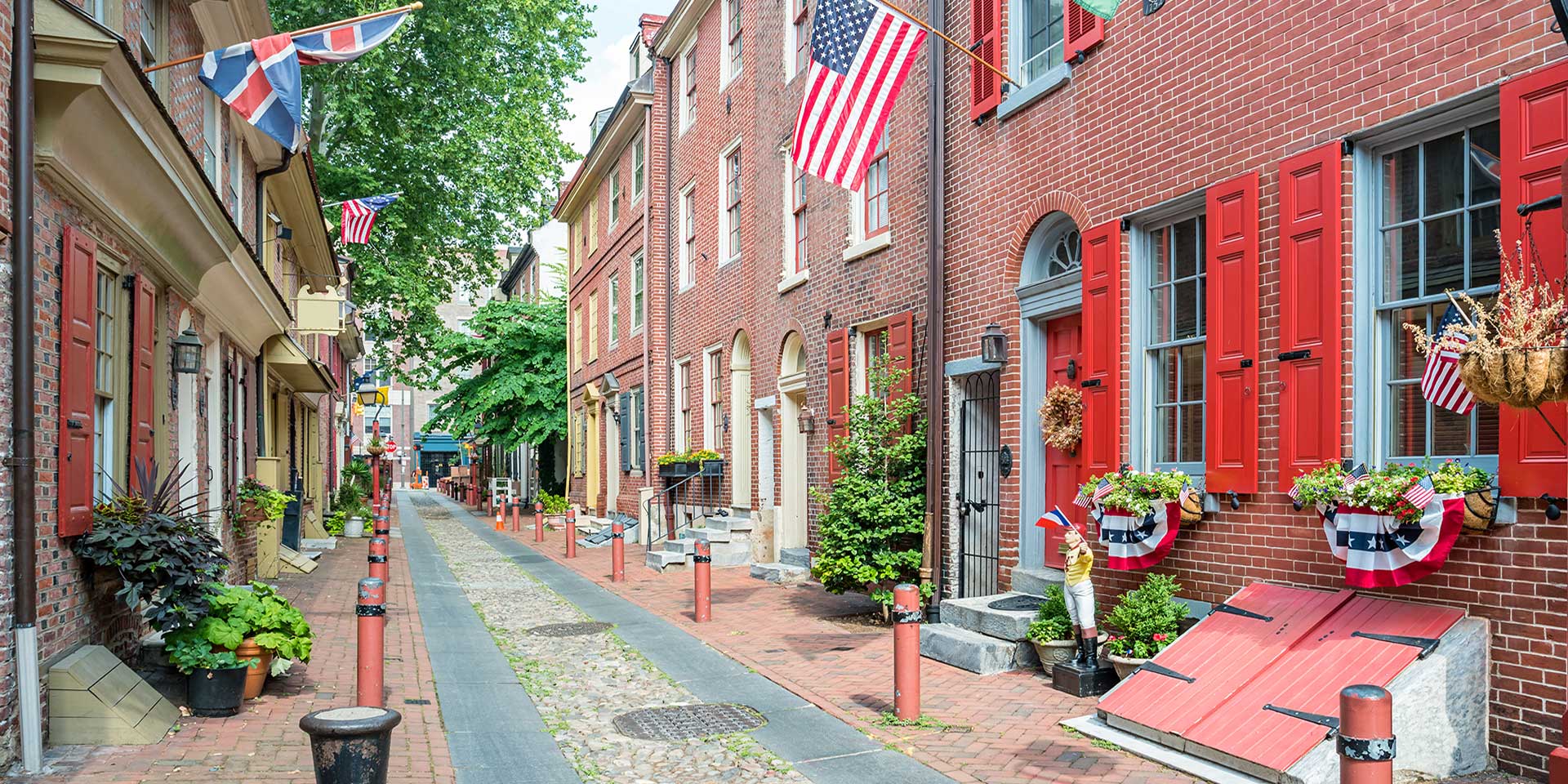
Step back in time in Philadelphia with a stroll down Elfreth’s Alley, the nation’s oldest residential street. The pedestrianized alley, flanked by houses built between 1728 and 1836, is home to the Elfreth’s Alley Museum House.
Nearby, the exhibits and events at African American Museum in Philadelphia work to preserve and share African American history and celebrate Black art and culture. The museum’s permanent exhibit, “Audacious Freedom: African Americans in Philadelphia 1776-1876,” is a must-see.
Learn about the history of the U.S. Constitution at the National Constitution Center, an interactive museum with rare artifacts, hands-on exhibits, and live performances. To experience an alternate side of American history, go inside the Eastern State Penitentiary, once the home of notorious criminals such as Al Capone.
Discover Philadelphia through the lens of Benjamin Franklin with the Franklin Footsteps Walking Tour. Starting at the Betsy Ross House, this is a walking tour with a twist: a guide who shares history through the art of rap.
When hunger strikes, grab a table at Bar Bombón, a restaurant that showcases Puerto Rican flavors with its all-vegan menu. Try the popular “fish” tacos made with hearts of palm, and the tres leches cake with cream of coconut, coconut milk, and rice milk.
Where to Stay: Make Philadelphia Marriott Old City your home base for exploring the historic district.
Baltimore
After a stroll through the cobblestone streets of Fell’s Point, get to know some of Baltimore’s smaller historic attractions. Sports fans may want to see the Babe Ruth Birthplace Museum, while literature buffs might be drawn toward the Edgar Allan Poe House and Museum.
Climb aboard vintage streetcars at the Baltimore Streetcar Museum, or explore the history of the train industry at the impressive B&O Railroad Museum.
Stop in at the Baltimore Museum of Art — where the entry is free — to see a collection of more than 95,000 pieces of art, including the world’s largest holding of works by Henri Matisse. Celebrate the work of self-taught artists with a visit to the American Visionary Art Museum, where the permanent “Bling Universe” exhibit is sure to catch your eye.
To sip a cocktail in a historic environment, check out the Owl Bar inside a building that dates back to 1903, and then get a taste of Maryland with a crab pot at Woodberry Kitchen.
Where to Stay: It’s an easy walk from Baltimore Marriott Waterfront to Fells Point.
Washington, D.C.
From the Arlington National Cemetery to the Lincoln Memorial, Washington, D.C., is full of important museums, monuments, and government landmarks.
In addition to these icons, the city also contains smaller historic sites, including President Lincoln’s Cottage, once the private home of the 16th president and now a museum. To learn more about Civil Rights, visit the Mary McLeod Bethune House, a townhouse that was the first headquarters of the National Council of Negro Women.
Part of the Smithsonian Institution’s network of free museums in D.C., the National Museum of the American Indian aims to highlight the voices of Native people and communities to educate visitors about Indigenous history, art, and culture.
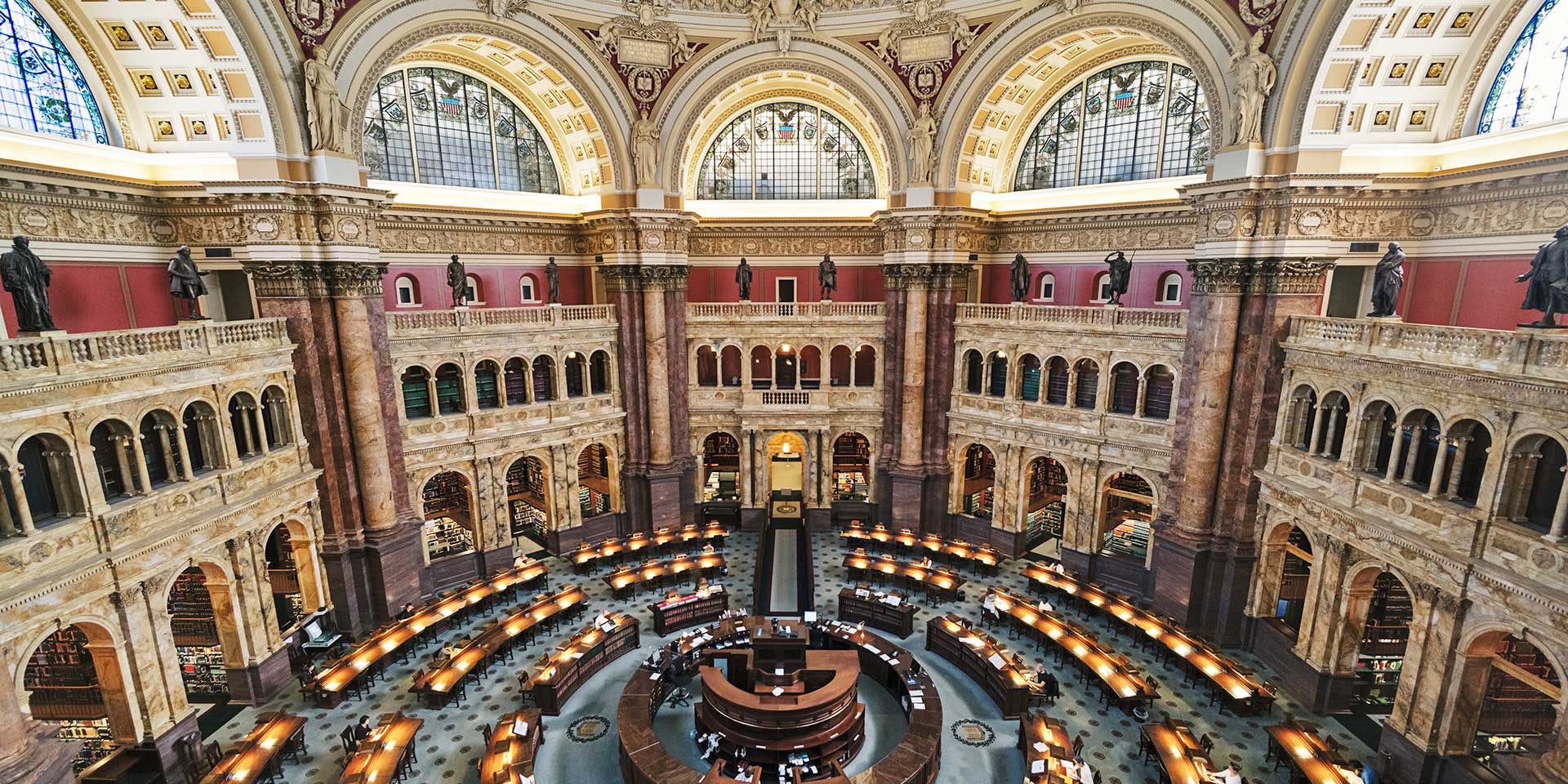
History buffs may also be interested in the Library of Congress, the national library of the United States and home of the 19th-century Thomas Jefferson Building with rotating exhibitions.
When you’ve worked up an appetite, tuck into dishes inspired by the Punjab region at G.O.A.T. Room. The tandoori chicken, lamb samosas, and palak paneer (a spinach and cheese dish) are fan favorites.
Where to Stay: An elegant choice for history buffs, The Mayflower Hotel, Autograph Collection has hosted many celebrities — and multiple U.S. presidents.
Related Articles


