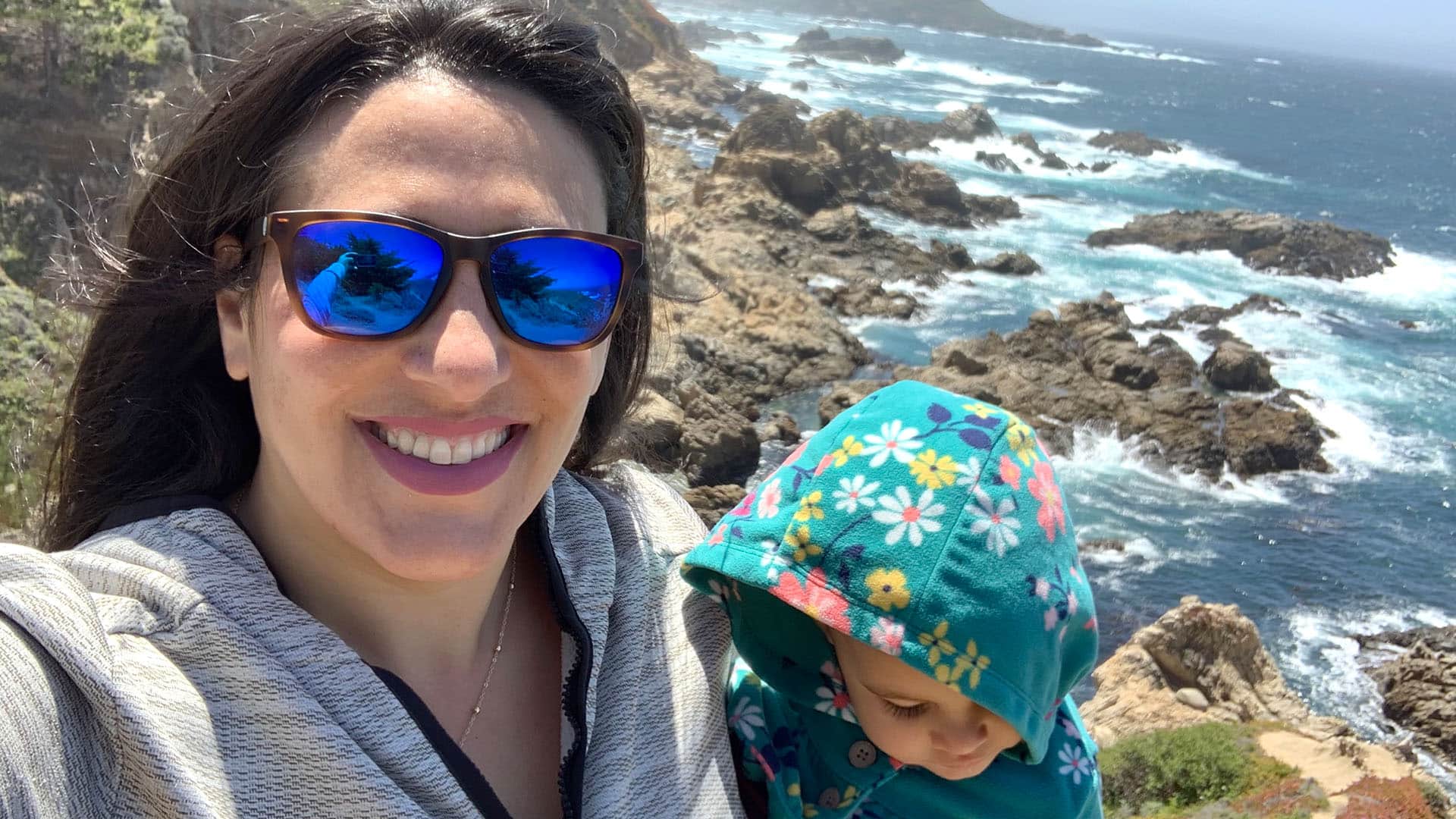
My husband and I have always been avid travelers, and traveling has always been such an important part of our relationship. We’d always wanted to share our love for travel with our family when we eventually had one. We started taking our daughter on day trips when she was just weeks old, and as she grew, on road trips and other travels.
When we learned that our daughter had Turner syndrome, and when she was later diagnosed with autism, ADHD, and a host of other conditions, we didn’t really know what that would mean for our family, let alone future travels. We were nervous about taking her on planes, long car rides, and overnight hotel stays.
The truth is many families with children or parents on the autism spectrum are anxious about traveling. In fact, the International Board of Credentialing and Continuing Education Standards (IBCCES) found that 78 percent of families they surveyed are hesitant to travel or visit new locations because they or their child are autistic. Inconsistent routines, new food, new environments, new sounds, different smells, different time zones, new sleeping environments, and lack of sensory-regulation tools can be disregulating to autistic and neurodivergent children and adults. These stressors can make family travel even more daunting.
Depsite these challenges, we have taken a lot of trips and made a lot of mistakes. Now that we have two children, each with their own sensory profiles and needs, we’ve learned how to travel in the way that works for our family. While every family and their abilities are unique, here are some tips we’ve learned from traveling with our neurodivergent kids paired with some expert advice. And while we still have airport meltdowns and vacation snafus, we are happy to report that our kids are budding into enthusiastic explorers.
1. Prepare Your Child with Social Stories
For weeks prior to travel, tell your child about the trip and don’t spare any details. Explain how you are going to travel there (airplane, car, train, etc.), who you are going to see, what you are going to do, and how long you are going to be gone. Use as many visuals as possible. There are many detailed videos on YouTube about how to move through the airport, how to board a plane, and how to stay in hotel rooms, etc. Also, look for videos of the attractions you will visit.
Before our daughter’s first plane ride, we showed her videos of other toddlers traveling on planes, the airport experience, and activities on the plane. When we got to the airport, she was excited to see the airplanes and knew what to expect.
2. Navigate for Air Travel, Airport Security, and Customs
Airport security and screening can be one of the most challenging parts of travel for families with autistic children. Before your trip, contact your airline to ask about autism-friendly accommodations, which may include priority boarding and other support services designed to make the travel experience easier and less stressful. You can also make this request at check-in, but it is best to do so in advance.
If you are traveling within the U.S., you can request accommodations for your family through TSA Cares, a program aimed at accommodating passengers with disabilities or medical conditions and individuals needing additional assistance. We have found this helpful at times during our travel as long as it is requested and confirmed in advance. We have also found that Clear, TSAPreCheck, Global Entry, and other Trusted Traveler programs have greatly streamlined the security process. Some airlines liked United also have social stories about the steps involved in air travel and can be very helpful in spelling out all of the different stages of travel.
If you have time during your journey, seek out a sensory room, quiet space, or children’s play area at the airport. A few years ago, while traveling to Jordan with my family, we intentionally chose an airport with indoor playgrounds for our layover so my daughter could regulate and reset before boarding the second leg of our trip. You may also want to consider purchasing a Hidden Disabilities Sunflower lanyard for your family. Recognized at airports, attractions, and transportation hubs around the world, it indicates that the wearer has a nonvisible disability and may benefit from additional support during their journey.
3. Ask for Accommodations Where You Can
Think about your child’s specific needs in different travel settings, whether at a hotel, attraction, restaurant, or elsewhere. If your child is very sensitive to noise or bright lights, call the hotels in advance of booking to ask for some additional information or queiter rooms. Try to avoid peak times at attractions or popular restaurants, or ask to sit outside. On several trips, we ordered takeout from popular restaurants and ate at the hotel, which offered our kids a quiet space and us the food we craved. I prefer to gather this information before visiting a specific place, but don’t be afraid to ask for what you need in the moment. If you’re traveling abroad, it can also be helpful to research how to say the term “autism” and any specific accommodations you may need in the local language to help ensure you’re understood and can access the support you need.
Don’t hesitate to ask for help to meet your family’s needs. You can also work with a Certified Autism Travel Professional for additional travel planning support.
4. Research the Experience
Before selecting a travel experience or provider, research what that experience entails. Read reviews: You can do keyword searches on most review platforms for terms that matter to you, like “accommodations” or “autism.” Contact the travel provider to find out what to expect and how the provider can accommodate your needs. I always look for accessibility information on attraction websites to see whether they offer programs for children with disabilities. Many parks, museums, and other attractions provide sensory-friendly programming, quiet spaces, sensory kits, or other tools that can help make the experience more enjoyable for the whole family.
For our family, tight spaces and long lines are especially challenging, and we like to know what to prepare for in advance or adjust our plan. The Disability Access Pass at Disneyland helped make our visit truly magical — we were able to manage the lines and both kids, and have a good time!
5. Bring the Comforts of Home
On one of our first trips to Monterey, California, we neglected to bring our daughter’s favorite stuffed bunny. Our daughter cried practically all night for two nights, and we didn’t know why. Needless to say — no one slept. This was an important lesson we learned very early on in our travels.
Now we bring essential toys from her daily routines (bath toys, play toys, nighttime stuffed bunny, and favorite books) to make our kids feel safe throughout the day. They really look to those items to signify different times of the day and make them feel relaxed. Now that the kids are older and more verbal, we ask them to pack what they want us to bring on the trip with us.
6. Pack Regulating Snacks
While we love trying the local food when we travel, we also bring some of our kid’s favorite snacks, like chewy fruit bars, crunchy nuts, protein-packed string cheese, and meat sticks and fresh veggies. We try to pack crunchy snacks with protein, carbs, and fat to keep them full for longer. Our occupational therapist taught us that crunchy and chewy foods help our daughter calm down and regulate her nervous system — it really works.
“Crunchy and chewy foods give sensory input into the mouth. The act of chewing pushes resistance deep into the ligaments and tendons of the teeth and jaw to release serotonin, which supports regulation,” says Larissa Geleris, pediatric occupational therapist and founder of Steady Parents. “It can either help calm down a child in times of overwhelm or can be used to increase alertness in times of low energy. And because it does both, it’s the best strategy to use when you don’t know what’s needed, but you know they need something!”
7. Regulate Yourself
We’ve all been there: You’re rushing around the airport, trying to find somewhere for dinner while your child is melting down in public — and your mood just makes things worse. It’s important to remember you are a key player in the family dynamic. Children feed off of your energy, and if you are stressed, your child will feel it.
Taking care of yourself matters, and it is part of taking care of your family. “When you make sure you are eating, drinking enough water, slowing down, breathing deeply, you are also supporting your child’s ability to regulate in the moment,” Geleris says.
8. Take Breaks Alone
While on a family vacation in Hawaii, I found myself worrying about food, my daughter’s sensory input, where we could find playgrounds, and more. It was taking away from the vacation, and my husband and I were stressed out.
We discussed organizing some individual breaks so we could actually relax. I was happy to take a break and indulge in an amazing Lomi Lomi massage from The Spa at Koala Landing in Kauai and spend a few hours by the gorgeous pool. I really needed that time away.
9. Find Regulating Activities for Your Child
Our kids are sensory seekers, so they crave movement, bouncing, and swinging. We have found some pretty amazing playgrounds on our adventures, including a train-themed playground on our recent stay at The Ritz-Carlton, Lake Tahoe. My kids even got to ride the train, which they loved … waiting in line for the train was a whole other story.
We also found this amazing inclusive playground at Lydgate Beach Park on Kauai with all sorts of unique sensory-regulating equipment. We have found indoor playgrounds, children’s museums, and other spaces that met our kids sensory needs all over the world. You can also find other regulating activities without leaving hotel grounds, like going on a walk, digging in the sand, swimming in the water, listening to music, and taking a bath.
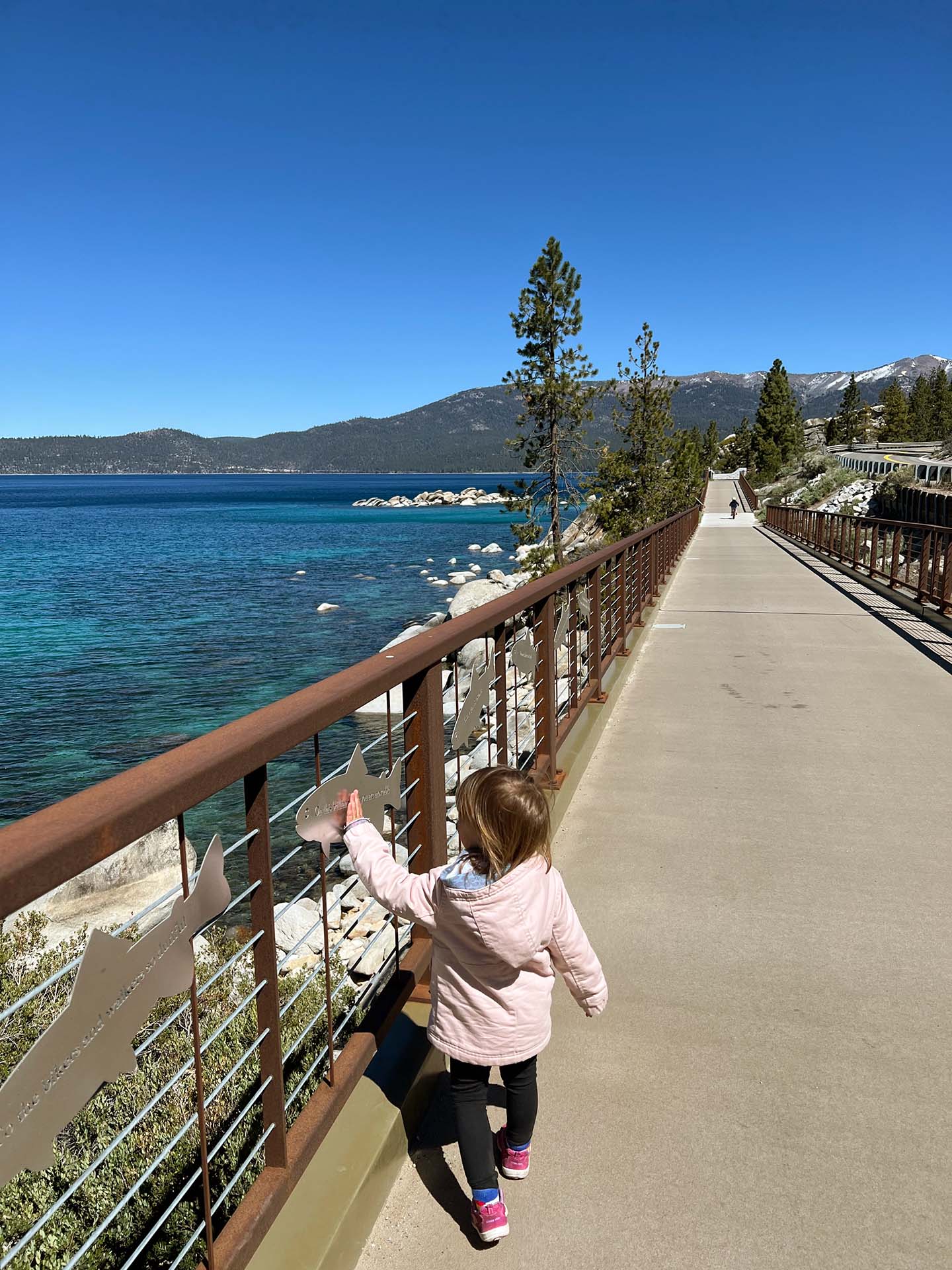
If you don’t have access to equipment or a playground, being outside can be a very regulating activity.
“Much of the time, visual and auditory input is reduced by being outside. Tired and overwhelmed eyes have more opportunities to rest, and the echos or deep purring of background appliances are eliminated,” Geleris explains. “Additionally, there is increased opportunity for movement, which can be extremely helpful.”
10. Be Flexible
Plan for lots of downtime and don’t overload your itinerary. Allow you and your child to settle into the vacation and get acclimated. Geleris offers the advice of thinking about the goal of your vacation. Are you looking to connect? Relax? Both?
“By planning for downtime, you are gifting your family with the time to shift back into a parasympathetic [relaxed] state, which is the state that allows you to connect with one another,” she adds. “Spend intentional time entering into your child’s world, doing what they love to do, without the looming to-do lists that you have back home.”
11. Breathe Through the Tough Times
There are just some experiences that come up that can be tough, and there really isn’t too much you can do. For example, even though my family all signed up for TSA PreCheck, we still got stuck in a monster security line on our way home from Hawaii. Our daughter really struggles with waiting in line, and the rain and the noise just made it worse — she screamed and fussed for the whole 45 minutes.
Then I got stopped for an additional security screening as my daughter was running away through the airport not looking back. Running away, or “eloping,” is common with autistic kids, and it was really scary in a crowded airport. Not surprisingly, we arrived on our plane flustered and frustrated. Once we finally settled in, I had to remind myself we were just doing our best.
Geleris advises us to focus on self-compassion in these moments of stress.
“When you approach these difficult moments with self-compassion — ‘Wow, this is really scary right now; I’m feeling helpless in this moment; it makes sense that I’m getting flustered’ — you actually start to shift your nervous system into a state of safety, which allows you to access your thinking brain again and come up with a plan,” she says.
To help calm your nervous system she recommends using regulating techniques like doing deep hand massages, chewing gum, or wiggling your toes and feeling the input of them into the ground. These exercises of grounding yourself into your body also help you shift out of fight-or-flight mode so you can make it through a difficult situation.
Bonus Tip: Don’t Worry About Everyone Else
When your child melts down or behaves differently than other kids, it is easy to be self-conscious. It is something I am actively working on. But the truth is we know our kids are different from other kids, and the behavioral expectations should also be different. While I do often prepare things to say to servers and strangers while traveling, we don’t owe anyone any explanations.
People you will never see again at a restaurant or on a plane don’t know all that you are doing to support your family or make a vacation happen. I have confidence in knowing traveling is good for my daughter and these experiences will enrich her for life.
Geleris leaves us with some very important advice to keep in mind when we travel.
“Remember, even if your child screams the entire airplane ride, makes a mess at dinner, or has a meltdown in the grocery store, everyone around you will get to their destination, eat their dinner, or buy their groceries anyway,” she says. “Release yourself from the guilt and the need to fix it and focus on what’s best for you and your child.”
Related Articles


