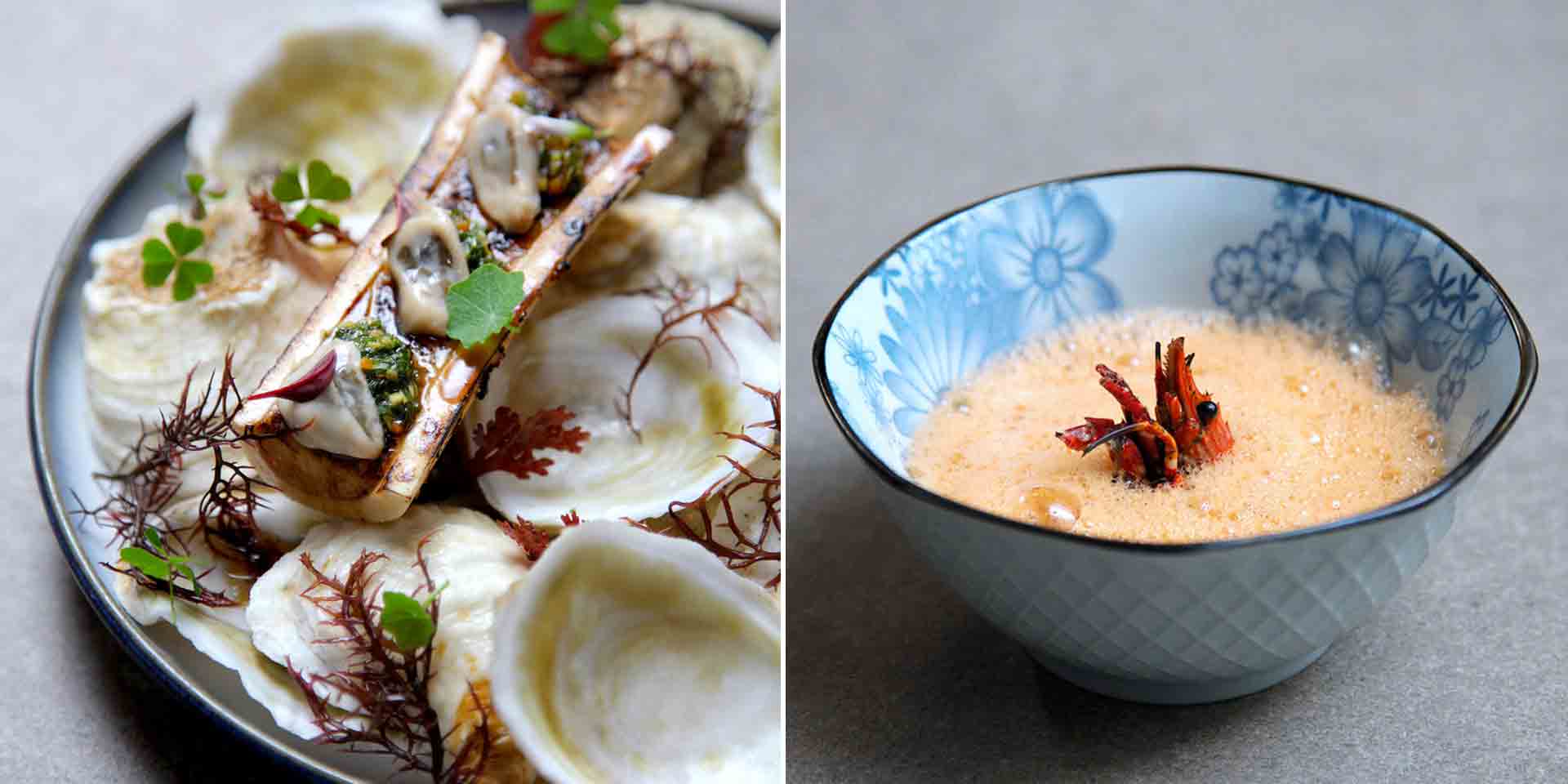
Tasting menus, an array of small dishes that combine to make a meal, have become fashionable in Santiago. Substantial, wholesome dishes still hold their own, but to experience more dishes, more creativity, and more unusual, less commonplace produce, it’s worth trying a few Santiago restaurants that offer a tasting menu.
It’s always a good idea to inquire first if you have any special dietary requirements. As always, check for travel guidelines and closures before planning your trip.
Boragó
Start with Boragó, the delightful restaurant run by Rodolfo Guzmán, which year after year garners the accolade of being the best in Chile. Its open kitchen means that you can watch as the plates are prepared —the kitchen team is so coordinated that it sometimes sometimes it looks as if they are dancing. They serve food (to avoid the word “plates,” as many kinds of serving methods are used, even rocks) that’s predominantly experimental, with flavors of the sea and the forest.
Exclusively Chilean ingredients, such as the chañar and maqui plants, may feature in the dishes, as well as ingredients gathered by local foragers who, for example, pick the “fruit” of the doca (a succulent) or salicornio (sea asparagus), another coastal succulent.
Peumayén
The menu at Peumayén, located in the busy Santiago district of Barrio Bellavista, says it serves “ancestral food.” At Peumayén, you can expect cuisine from northern, central, and southern Chile, with traditional dishes and unusual ingredients (such as guanaco, or llama, meat).
The meal starts with a new take on a bread basket, containing “breads” such as milcao (a kind of potato fritter made with chicharrón, or lard) from Chiloé, and po’e, made with bananas and originating from Easter Island. The tasting menu consists of six courses that take you on a journey through Chile.
99
Perhaps responsible for setting the trend in Santiago of naming eateries after their street number, the wonderful 99 restaurant offers a tasting menu of six or nine dishes at lunchtime.
The restaurant is run by the chef Kurt Schmidt, who also worked at the famous Noma, as well as at Boragó, and its dishes not only contain Chilean ingredients, but are also presented on Chilean materials. These include bowls made of a local wood, raulí, and a copper butter dish. Make sure you leave room for dessert, though, as they’re known for being both inventive and delicious.
Related Articles


