Some cities reveal themselves immediately, while others require time: a few unhurried mornings, a market visited again and again, a neighborhood explored on foot rather than by car. The most culturally immersive destinations in the world share an authenticity that rewards presence and patience. These are the kinds of places where a visit turns into something closer to a lived experience.
Culturally immersive travel isn’t about checking popular attractions off a list; it’s about slowing down enough to feel the texture of daily life through the food, architecture, and rituals of a place. Where you stay shapes your ability to dive deeply into a destination, and a thoughtfully designed hotel rooted in a local neighborhood doesn’t just provide a bed — it provides a way in.
The following destinations are an invitation to adjust to the local rhythms of life. As always, be sure to check for travel guidelines and closures before planning your trip.
U.S. and Canada
Louisville, Kentucky, U.S.
More than just a spirit, bourbon is central to Louisville’s identity. Here, urban distilleries sit beside the wide, lazy Ohio River, and the smell of charred oak barrels hangs in the air. The Old Louisville neighborhood is one of the largest intact Victorian streetscapes in the U.S., with elegant townhouses, gas lamps, overgrown gardens, a vibrant porch culture, and corner stores that haven’t changed in decades. The nearby NuLu district hums with a quieter energy, featuring independent bookshops, ceramics studios, and farm-to-table restaurants that source from the surrounding countryside. Muhammad Ali’s Louisville is here, too, in the museum bearing his name and the historically Black neighborhoods that shaped him.
Built inside a former bourbon warehouse on historic Whiskey Row, Hotel Distil, Autograph Collection puts you steps from the distilleries, the waterfront, and the heart of downtown.

Savannah, Georgia, U.S.
Savannah isn’t exactly a hidden gem, but don’t let that stop you. Few cities in America are as genuinely immersive. The city’s layout was designed in 1733 around four squares, eventually growing to 22, each forming a distinct neighborhood with its own personality, its own pace, and its own cast of regulars. Walk between them and the city unfolds in layers of cobblestone streets, wrought-iron fountains, and live oaks draped in Spanish moss. The Beach Institute, housed in a school for free Black American children after Emancipation, celebrates African American art and history. Congregation Mickve Israel, founded in 1733, is one of the oldest synagogues in America. The Savannah College of Art and Design has injected the city with a creative energy that shows up in its galleries, restaurants, and street life. And when it comes to food, Lowcountry staples like shrimp and grits are taken seriously, whether served in a corner diner or The Grey, chef Mashama Bailey’s James Beard Award–winning restaurant.
With balconies and a rooftop bar and restaurant overlooking the Savannah River, and a trolley stop right outside, AC Hotel Savannah Historic District is an ideal place to relax before and after a day on the squares.
Winnipeg, Manitoba, Canada
Winnipeg sits at the center of Canada, both geographically and culturally. This is where the Red and Assiniboine rivers meet. The Anishinaabeg, Inninewak, Anishinewak, Dakota Oyate, Denesuline, and Red River Métis have gathered in this area for more than 6,000 years. Today, the city is home to Canada’s largest urban First Nations, Inuit, and Métis population, an influence that can be seen in local art galleries, politics, and food. The Saint-Boniface district is the largest French-speaking community west of Quebec, with its own cathedral, café culture, and strong sense of pride. The Exchange District, a grid of turn-of-the-century warehouse and commercial buildings in extraordinary condition, hums with independent restaurants, theaters, and design studios. The Canadian Museum for Human Rights rises next to the Forks like a question the city is still answering. Winter is brutal and beautiful, while in the summer, the whole city moves outdoors at once, as if making up for lost time.
Delta Hotels by Marriott Winnipeg places you downtown, less than a mile from the Assiniboine River and within easy walking distance of the Forks, the Exchange District, and the Winnipeg Art Gallery.
Montreal, Quebec, Canada
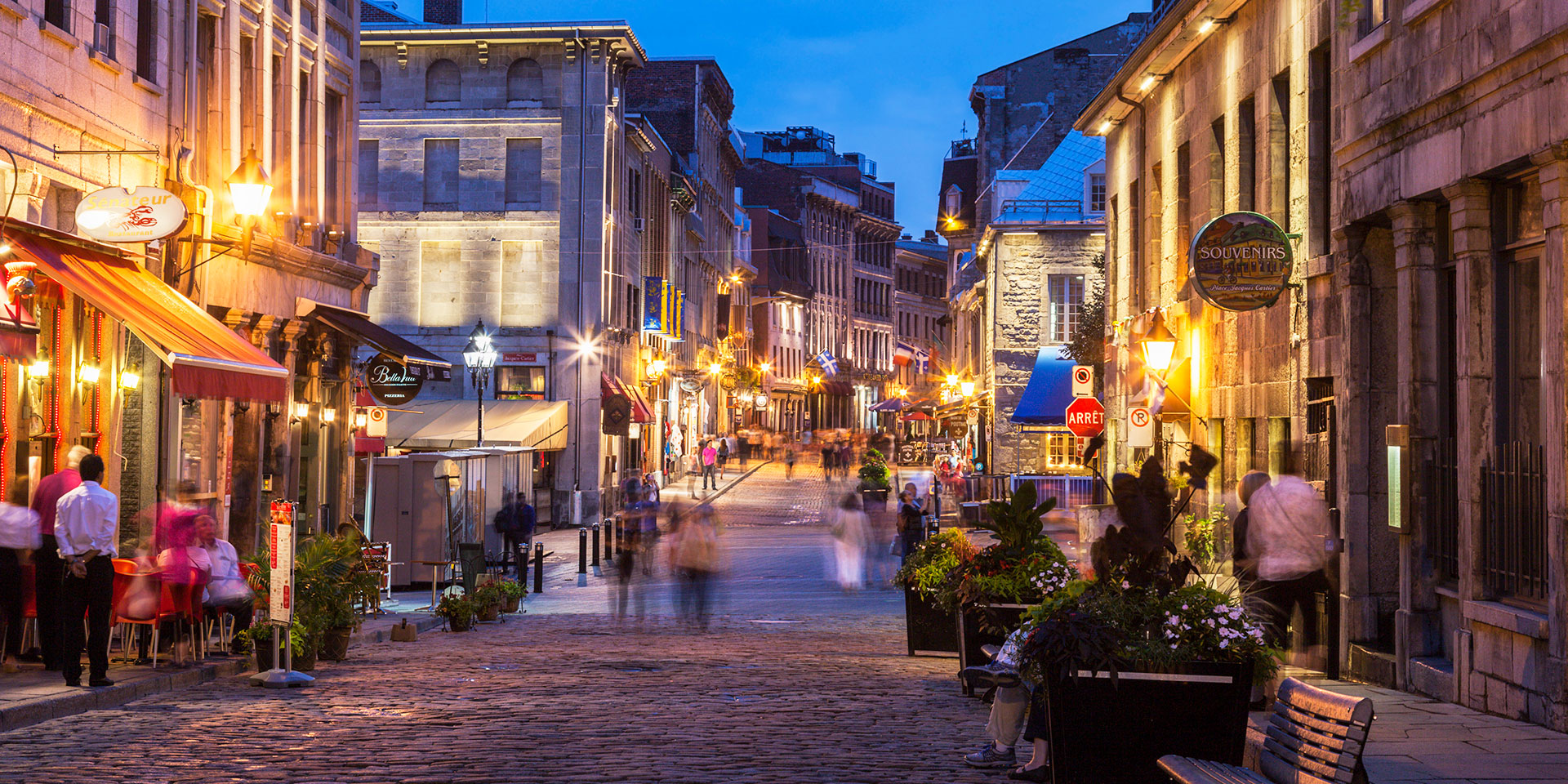
In Montreal, mornings begin with espresso and still-warm wood-fired bagels from St-Viateur in Mile End. By afternoon, the cobblestone lanes of Old Montreal hum with street musicians and gallerygoers, while the stained-glass glow inside Notre-Dame Basilica offers a bit of quiet. At Jean-Talon Market, farmers and fromagers proudly share the bounty of Quebec’s terroir, inviting you to taste before you buy. As evening settles in, neighborhoods fill with the clink of wine glasses and the aroma of French kitchens reimagining local ingredients. A climb up Mount Royal reveals how the river, skyline, and leafy streets knit together, reminding you that here, daily life is the main attraction.
In the midst of Old Montreal, AC Hotel Old Montreal surrounds you with cobblestone streets, independent boutiques, and riverfront views, placing you steps from the St. Lawrence River and the city’s most storied quarter.

Mexico and South America
Oaxaca City, Mexico
In the compact Centro Histórico of Oaxaca City, daily life unfolds at a leisurely pace around the zócalo, or grand central plaza. Markets are fragrant with roasted chiles, and mezcal is poured from unlabeled bottles at neighborhood vinaterías. Artisans sell black-clay pottery (barro negro) and hand-loomed textiles from blanket-draped stalls. Bright bougainvillea spills over low-rise stone buildings and courtyard walls, and the white smoke of copal incense billows from doorway altars. Locals speak to each other in Spanish, Zapotec, and Mixtec, or a blend of all three.
A few blocks from the zócalo, City Centro by Marriott Oaxaca is shaded by a 200-year-old tree in Barrio de Jalatlaco, designated the city’s “Magical Neighborhood” for its striking historic architecture, vibrant murals, and cobblestone lanes.
Corrientes, Argentina
Corrientes moves to the thumping rhythm of cumbia, the soulful folk notes of chamamé (cha-mah-MEH), and the slow pull of the Paraná River. This city in northeastern Argentina sits at a cultural crossroads, with its Spanish-inflected tiled rooftops, decorative ironwork, and shaded arcades existing alongside an undercurrent of Guaraní tradition seen in the herbal remedies, fiber baskets, and handwoven cloth sold at street stalls. Social life unfolds quietly in plazas, parish churches, and neighborhood almacenes (local grocery stores). Along the wide waterfront boulevard, fishers cast their lines in the early morning, while near sunset, as the water turns copper in the glowing light, locals gather to promenade and sip gourds full of piping-hot yerba maté.
Perched along the Paraná waterfront, Marriott Corrientes is home to the Predilecto rooftop bar, which offers cocktails, platitos (little plates), and a front-row seat to that golden-hour skyline.

Europe, the Middle East, and Africa
Marrakech, Morocco
Step into the Marrakesh medina and the 21st century politely recedes, replaced with layered sensations: the smell of leather tanneries and orange blossoms; the blare of a muezzin call bouncing off ochre walls; the buzz, color, and heat of the souks; and the cool geometry of tiled courtyards. Elaborate meals are eaten communally at a leisurely pace, including slow-cooked tagines fragrant with preserved lemon and saffron, savory-sweet flaky bastille (meat pie), and fresh mint tea poured from high above your cup. Local coppersmiths, weavers, and cutters of zellige tile each claim their own quarters here, continuing the craft heritage of the Amazigh people that stretches back centuries.
About fifteen miles from the medina, the intimate Amerruk, Marrakech, Autograph Collection sits at the foot of the Atlas Mountains, with private terraces, mountain views, and a spa rooted in Arabian and Amazigh wellness traditions that offer a calm contrast to the bustle and intensity of the city center.
Seville, Spain
Anchored by a Gothic cathedral, the Moorish Alcázar palace, and the Archivo de Indias (Archive of the Indes), Seville’s historic center is one of Europe’s most architecturally complex districts, with Baroque, Mudéjar, and Roman influences overlapping at nearly every corner. In the barrios of Triana and Santa Cruz, flamenco is a living craft, taught and practiced across generations rather than staged for visitors. Daily life here orbits around food and conversation, in tapas bars serving Manzanilla sherry paired with queso de cabra (goat cheese) and jamón Ibérico (a dry, cured ham) and in azulejo-tiled plazas that fill with locals each evening when the sun’s gone down.
Directly opposite the cathedral, housed in the former headquarters of the Banco de Andalucía, Querencia de Sevilla, Autograph Collection surrounds you with the city’s architectural and cultural heritage, from its handmade ceramic details and flamenco fan–inspired furnishings to its rooftop terrace with 360-degree views over Seville’s historic skyline.

Nice, France
Nice is often reduced to its famous Promenade des Anglais, but the city’s soul lives in the narrow lanes of Vieux-Nice (Old Nice), lined with amber and rose facades and home to cooking traditions shaped as much by Liguria, Italy, as by France. Socca (a chickpea flatbread), pissaladière (a savory tart), and salade nicoise are all quintessentially southern French dishes that reflect centuries of Italian influence. The Cours Saleya market — selling olives, fresh fish, and local produce — has anchored daily life in the old town for generations. The Colline du Château (Castle Hill) offers panoramic views over the bay, while the Musée Matisse and Musée Marc Chagall speak to a creative heritage that is as central as any meal or market to understanding Nice.
Restored from a 17th-century convent in Vieux-Nice, Hôtel du Couvent, a Luxury Collection Hotel, Nice, France provides a sanctuary of cloistered gardens, Roman baths, and stone-walled suites decorated with antiques and rare books.
Asia-Pacific
Hanoi, Vietnam
Hanoi is slow and calm in the early mornings, when elderly folks practice tai chi by Hoan Kiem Lake, and intensely alive in the Old Quarter, where 36 guild streets still bear the names of their traditional trades. The city’s history can be tracked through its architecture, with imperial pavilions, Soviet-era apartment blocks, and family-owned Buddhist temples sitting alongside French-style buildings from Vietnam’s time as a French colony. So much beauty can be found in small moments and rituals here: a woman balancing a shoulder pole of fruit, a family altar visible through an open shopfront, the sounds of motorbikes and temple bells, and the smell of pork broth that’s been simmering since sunrise. The local approach to food is deeply ceremonial, from the art form of pho to the pleasure of a ca phe trung, an indulgently sweet, creamy coffee topped with an egg-enriched foam.
Overlooking Tay Ho (West Lake) in the diplomatic quarter, Sheraton Hanoi Hotel offers easy access to the Old Quarter, the Temple of Literature, and Hanoi’s famous culinary streets.
Yogyakarta, Indonesia
Yogyakarta (nicknamed Jogja) is the cultural and spiritual heart of Java. The city is home to the royal Kraton palace, where Javanese court traditions like gamelan music and wayang puppetry are still actively practiced, not merely preserved. Beyond the palace walls, the batik workshops of Malioboro Street perpetuate a UNESCO-recognized textile heritage. The food is sweeter here than elsewhere in Indonesia; the city’s signature dish is gudeg, a stew of jackfruit simmered in coconut milk, palm sugar, and spices served with chicken, egg, and sambal goreng krecek (spicy beef skin). Within an hour of the central city, the ninth-century Buddhist temple complex of Borobudur and the Hindu temples of Prambanan are some of Southeast Asia’s most important monuments, serving as natural extensions of Jogja’s identity.
Set steps from Pakuwon Mall Jogja, Yogyakarta Marriott Hotel provides a centrally located base for exploring the city’s living traditions, as well as the ancient temples beyond.

George Town, Penang, Malaysia
George Town, the capital of the Malaysian state of Penang, is a UNESCO-listed port city known for its fascinating mix of cultures. Chinese clan houses, Hindu temples, art deco shophouses, and Malay kampung houses exist in close proximity to each other.
Penang’s cuisine reflects the island’s multicultural past and present, with Malay, Chinese, and southern Indian culinary influences all present. At busy hawker stalls, Malay dishes like assam laksa (a spicy and sour fish soup with noodles) and char kway teow (stir-fried rice noodles with shrimp, Chinese sausage, beansprouts, egg, and more) are often served alongside Hokkien and Teochew dishes like Penang’s famous Hokkien prawn noodles. Nasi kandar, or rice with assorted curries, is the evolution of the working-class lunches brought over by Tamil laborers. The Peranakans, a merchant group also known as Straits Chinese or Baba-Nyonya, who settled from Singapore to Phuket, also left their distinctive mark on the cuisine here.
Strolling the city’s UNESCO heritage zone — particularly along the Lebuh Armenian, which has become an open-air gallery of colorful murals and ironwork sculpture — reveals a city that wears its multicultural identity with remarkable ease.
In George Town, Penang Marriott Hotel offers immediate access to the heritage zone, close enough to smell charcoal woks firing up before dawn, hear the temple bells that mark the morning, and explore the narrow lanes and sun-bleached streets on foot.
Jinghong, Yunnan Province, China
Wedged between Myanmar and Laos, Xishuangbanna, one of eight autonomous prefectures in Yunnan Province, has a lush, tropical climate and its own distinctive culture. Though it’s the regional capital, Jinghong moves at a languid pace: Buddhist temples rise in white stupas rather than the red and gold of Han China, Dai villages sit on stilts among banana and rubber trees, and the air is scented with lemongrass and incense. Markets brim with tropical produce and herbs unfamiliar even to seasoned travelers, and the surrounding landscape of tea forests, rice paddies, and slow rivers sets a pace that the rest of China rarely enjoys.
Set in the Hot Spring district of Gasa Town near a traditional Dai village and a few minutes from Xishuangbanna Gasa International Airport, Sheraton Grand Xishuangbanna Hotel offers a tropical resort base with hot springs, three restaurants, and easy access to the rainforests and Dai cultural sites that define the region.

Chongqing, China
A vast, fog-shrouded, cinematic city, Chongqing is built vertically across steep hills where the Yangtze and Jialing rivers meet. Getting around means riding outdoor escalators up cliffsides, squeezing into cable cars strung between neighborhoods, and climbing staircases that double as streets. All that mist and elevation create an almost brooding atmosphere that has lured photographers and filmmakers for decades. In this provincial-level municipality, fierce local pride is expressed in the oily, numbingly spicy hotpot, eaten communally with family and friends at a leisurely pace. The ancient hillside neighborhoods of Hongyadong and Ciqikou offer texture and history against the backdrop of one of the world’s most strikingly modern skylines.
On the south bank of the Yangtze and within the historic Nan’an district, Le Méridien Chongqing, Nan’an is a short walk from the city’s oldest neighborhoods, allowing you to gain a foothold in this superhero-sized city at a slow, human pace.
Related Articles